 Image 1 of 1
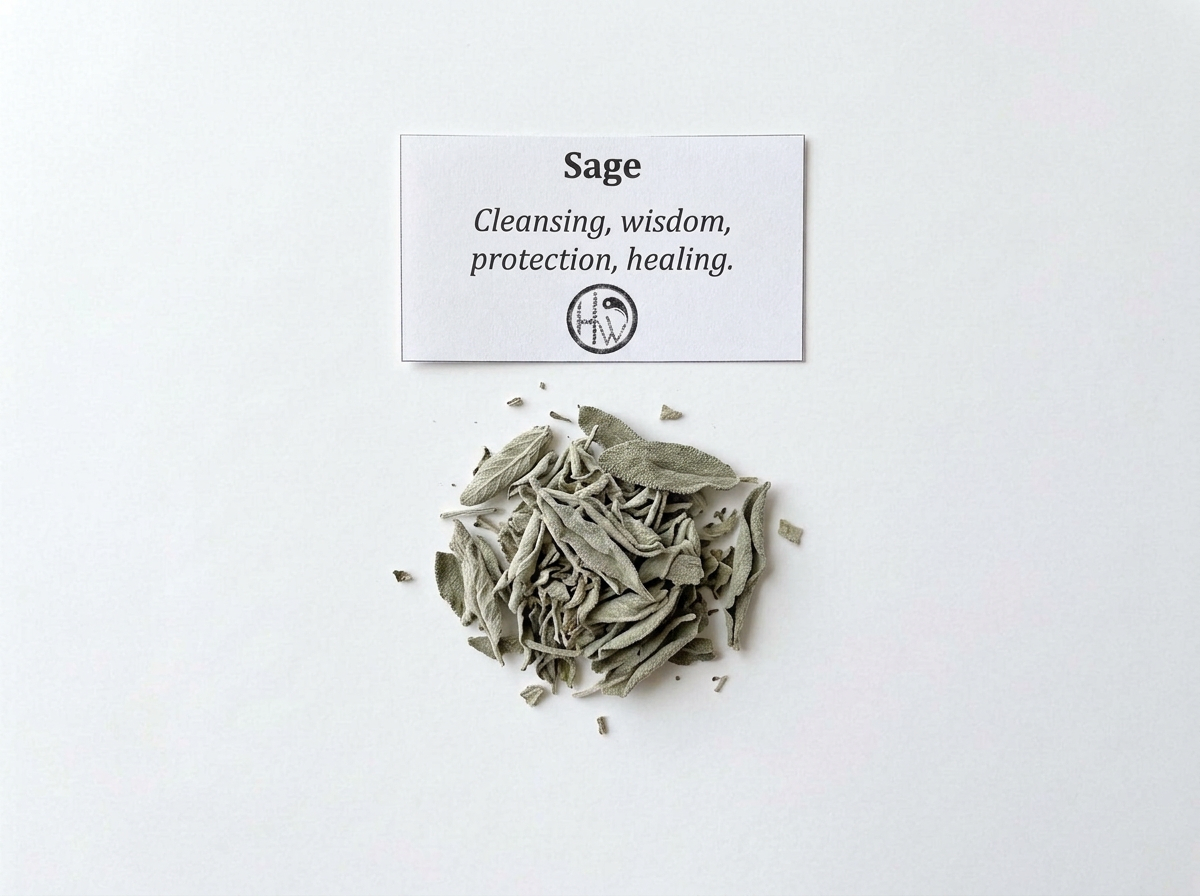
Sage (Salvia officinalis), often called garden sage or common sage, is a hardy, silvery-green herb native to the Mediterranean and now grown around the world. The leaves are harvested and dried, leaving soft, gray-green pieces with a warm, herbal, slightly camphor-like scent. If you are looking for white sage or another sage, just ask our staff.
Sage has been prized for thousands of years. Its botanical name comes from the Latin salvere, meaning "to save" or "to heal." The ancient Greeks and Romans valued it, and in medieval Europe it was a staple of monastery gardens and household practice. In European folk tradition, sage is linked to wisdom and long life. It is also widely used in smoke cleansing across many cultures. We honor that other sages, such as white sage, have deep and sacred roles in Native traditions, and we encourage you to learn about and respect those traditions.
Sage is a versatile herb for spiritual baths, steam cleansing, smoke cleansing, aromatherapy, rituals, incense, and incense making.
Sage is associated with cleansing, wisdom, protection, and healing. It is traditionally linked to the element of Air, the planet Jupiter, and the Moon, with a clear, wise, purifying energy.
Cleansing: Sage is one of the best-known herbs for clearing stale or heavy energy from a space, an object, or a person. It is associated with a fresh, quiet, clean feeling afterward.
Wisdom: Rooted in its history of long life and knowledge, sage is traditionally used to invite clarity, good judgment, and insight.
Protection: In folk practice, sage is used to protect a home or person from unwanted influences, especially after periods of conflict or illness.
Healing: True to its name, sage is associated with spiritual and emotional healing, and with restoring balance after hard times.
Elemental, Planetary & Lunar Correspondences: Air, Jupiter, and the Moon. Thursday (Jupiter's day) and the full moon suit wisdom and blessing work. The waning moon suits cleansing and release.
1. Smoke Cleansing Place a few dried leaves on a lit charcoal disk in a heat-safe dish and let the smoke move through doorways, corners, and entryways. Open a window and keep good ventilation.
2. Spiritual Baths Steep a handful of leaves in hot water like a tea, strain well, and add the liquid to your bath for cleansing and renewal. Patch test first.
3. Steam Cleansing & Aromatherapy Add a few leaves to a bowl of steaming water or a simmer pot with rosemary and lemon peel for a fresh, herbal steam that clears the air.
4. Skin Care & Bath Soaks Add dried leaves to bath salts, facial steams, or herbal soaks. You can also infuse them in a carrier oil (sweet almond or jojoba) for several weeks and use the oil for external care. Patch test first.
5. Incense Making Add a pinch of crushed sage to loose incense blends with lavender, cedar, or frankincense, or grind it for homemade incense cones and sticks.
6. Wisdom, Protection & Altar Work Place a few leaves in a small pouch with a piece of clear quartz and keep it on your altar, desk, or study space. Sprinkle a little around the base of a white candle during wisdom or healing rituals, keeping the herb away from the flame.
Safety Note: Sage is traditionally used externally, aromatically, and in ritual. Internal use (such as tea) is only appropriate if you have confirmed with a qualified professional that this herb is right for you and that it is food-grade. Do a patch test before using in any skin-contact preparation. If you are pregnant, nursing, taking medication, or have allergies, asthma, or other health concerns, check with a qualified professional before use. Keep away from children and pets. When burning, use a heat-safe container with good ventilation and never leave it unattended. Statements here are traditional and spiritual, not medical advice.
1 oz — $ 4.99
4 oz — $16.99